Eco-Friendly Garden Pest Control
Updated: Feb 24
A biodiverse garden environment with native plantings will create an ecosystem where everything is in balance and where you will rarely have to deal with garden pest infestations.
However, something occasionally comes along to disturb this balance - this is when you might need a little help in protecting your gardens and all the hard work you've put into their care.

The problem is that you also understand that many of the birds and insects already calling your garden a home have a beneficial impact and play an important role in a delicately balanced ecosystem.
You know and understand that if you take extreme measures such as using quick chemical fixes like pesticides, all those beneficials can also perish along with the pests you are trying to get rid of.
There is a way to help control many garden pests ecologically through long-term prevention, and targeted biological controls like traps and lures, beneficial predatory insects or nematodes. These approaches can help control smaller infestations in conjunction with other sustainable management practices. Organic pesticides and insecticides should only be used in severe situations and as a last resort (or frankly, not at all).
Lures are usually composed of floral scents, pheromones or they might present visual cues that attract a targeted pest for capture within a trap. Being targeted, they do not affect beneficial insects or pollinators negatively.
Beneficial predatory insects can also be released into your garden to feast on various insect eggs, larvae and adults alike.
Nematodes are micro-organisms that act as a parasite - they can help control many of the grubs (soil-dwelling larvae) that damage the roots of turf and other garden species. Nematodes are often the first phase approach to controlling pests, the second phase being the use of traps and lures to capture insects in the adult stage.
Don't know where to start?
Here is a list of garden pests you can click on for links to their targeted controls:

ORCHARDS
Apple maggot (affects fruit trees including apple, plum, pear, cherry, apricot, serviceberry and blueberry)
Plum curculio (affects stone fruit like peach, plum, apricots, cherries but also apple, pear and blueberry)
Rose chafer (affects flowers and fruits of apple, cherry, peach and many other fruit trees, blueberry, and grape vine)
Japanese beetle (affects leaves, flowers and fruits of apple, peach, plum, cherry, grape and berries)
To manage sack-sucking insects like aphids, mites and whiteflies, introduce predatory insects like beneficial native ladybugs or beneficial praying mantis
Grubs (beetle larvae that live in soil and that emerge as rose chafer, June or Japanese beetles which damage fruit trees) - apply beneficial nematodes for orchards
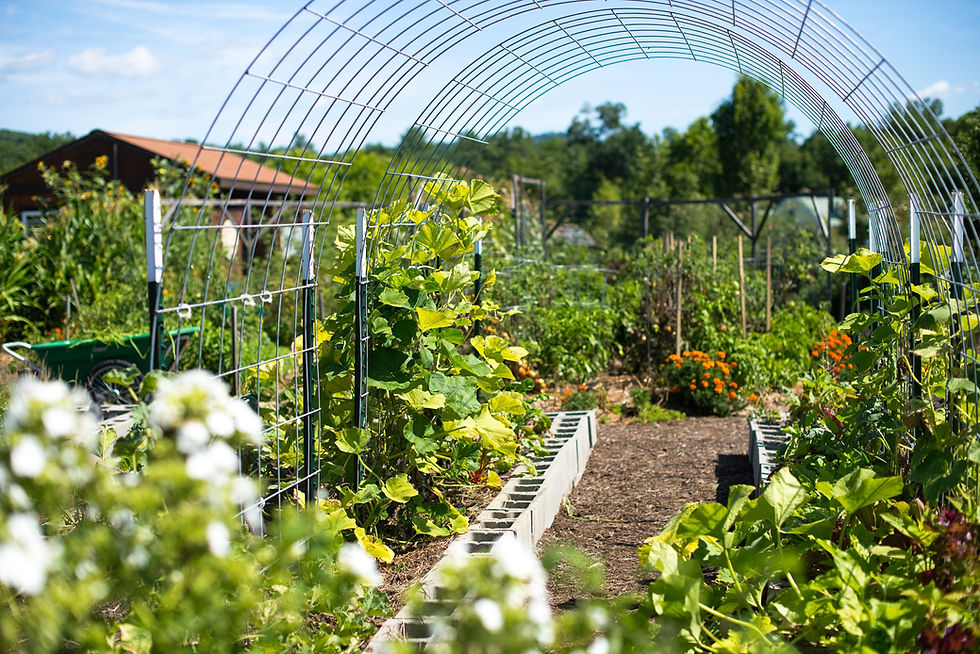
VEGETABLE GARDENS
Cucumber beetle (affects all members of the cucurbit family: cucumber, squash, pumpkin, watermelon, cantaloupe)
Squash vine borer (affects all members of the cucurbit family: cucumber, squash, pumpkin, watermelon, cantaloupe, gourd)
Rose chafer (affects beans, beets, peppers, corn, cabbage, especially in sandy sites)
Japanese beetle (affects corn and beans, asparagus, rhubarb, basil)
Aphids, mites, whiteflies and other sap-sucking insects - introduce predatory insects like beneficial native ladybugs or beneficial praying mantis
Grubs and other soil-dwelling larvae (affect root crops like carrots, beets, radishes and potatoes as well as shallow-rooted leafy greens) - apply beneficial nematodes for gardens

GARDENS/TREES
Rose chafer (affects foliage and blooms of over 200 species including roses, peonies, dahlias, hollyhocks and many trees)
Japanese beetle (affects foliage and blooms of over 300 species including roses, peonies, dahlias, hollyhocks, and many trees)
Box tree moth (quickly kills all varieties of boxwood shrubs)
Spongy moth/LLD moth, formerly known as "Gypsy moth" (in heavy infestations, completely defoliates many trees, conifers and other garden plants)
Slugs (affects foliage and flowers of hostas, dahlias)
Aphids, mites, whiteflies and other sap-sucking insects - introduce predatory insects like beneficial native ladybugs or beneficial praying mantis
Grubs (prefer fine roots of shallow-rooted plants like annuals and bedding plants) - apply beneficial nematodes for gardens

LAWNS
Grubs (feed on fine roots of shallow-rooted plants like turf grass) - apply beneficial nematodes for lawns
It's important to remember that these methods are not pesticides - they will not completely eradicate a pest all on their own. They are designed as control methods that are highly effective in conjunction with other sustainable pest management practices that support a balanced ecosystem in our gardens.
OTHER IMPORTANT SUSTAINABLE MANAGEMENT PRACTICES
crop rotation
companion plantings - companion plants that 1) act as aromatic repellents, 2) serve as a trap crop, 3) attract beneficial predatory insects, or 4) are inter-planted to reduce the concentration of a single plant - a practice called "intercropping"
long term prevention - promoting biodiversity with the use of native plant species that attract beneficial insects, enhancing soil health to promote a healthy and diverse soil microbiome)
manual removal (hand picking)
physical barriers (copper barriers, row covers, collars for seedlings, diatomaceous earth)


Comments