Stem Nesting Bees + Overwintering Insects + Spring Garden Clean-Up

When the sun finally comes out to play and the weather warms up, we all want to jump into our gardens and cut everything back right to the ground. It feels like a fresh start — remove those brown and beige perennial remnants, create a blank canvas, and let the new green foliage emerge into a tidy season.

But those of us who left old stems standing and fallen leaves resting over winter have a nagging question: when is it actually safe to clean up? We left everything in place because we know so many insects depend on plant debris to overwinter. It would be a shame to disrupt their sleep now — or worse, inadvertently cut a bee in half, trample a butterfly's chrysalis, or uproot a woolly bear caterpillar.
Here's something that surprises most gardeners: bees don't actually nest in the stems you left standing this past fall. Research shows that first-year stems — the ones that grew and died last season — are not occupied over their first winter. The bees are in the stems from the year before that: older, weathered stems whose broken or cut ends have given insects access to the hollow or pithy centres inside. So while it's safe to cut back this past season's new growth, the older stems in your garden are genuinely important habitat and worth leaving in place.
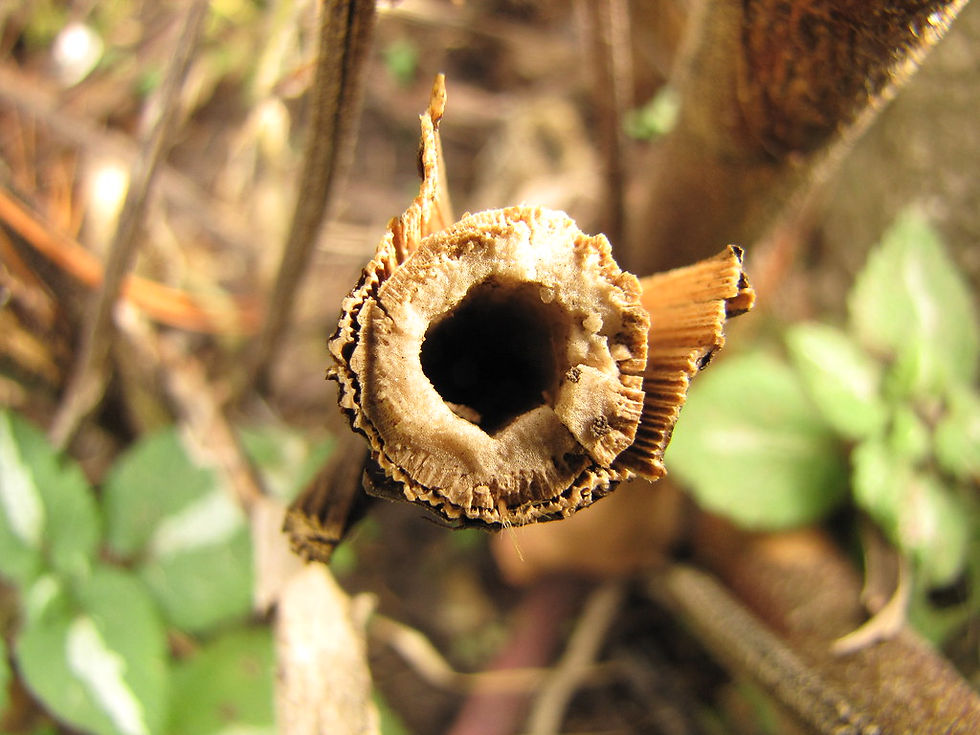
The plants most valued for stem nesting include those with pithy or hollow stems: Joe Pye weed, swamp milkweed, bee balm, mountain mint, sunflowers, asters, coneflowers, and Culver's root, as well as grasses like switchgrass and shrubs like elderberry, raspberry, and hydrangea.
TIMING

A good rule of thumb for timing: wait until apple blossoms begin to fade. Mason bees emerge right around fruit tree bloom — when temperatures are consistently around 10°C — while carpenter bees wait a little longer, typically until temperatures hold steadily above 15°C. For those of us in Ontario, that often means late April into May.

If you'd like to tidy up before then, here's what I like to do: cut back this season's new stems to about 15–18 inches from the ground (which also creates fresh nesting habitat for next winter's bees), then lay the cut stems and leaves loosely around the base of the plant. The garden looks cleaner, but nothing is lost. As the weather warms, any insects still sheltering have a way out — and those stems and leaves become a free mulch that protects soil organisms and slowly feeds the soil as they break down.

One last thing: tread lightly when you're working in spring beds. Gently moving leaves out of your path before you step — and lightly raking them back in as you go — makes a real difference for the soft-bodied insects resting just beneath the surface.

Comments